Imagine plugging in a new electric vehicle charger, turning on the air conditioner, and running the dishwasher at the same time, only to hear the familiar click of a tripped breaker. It is frustrating, but it also tells a story. Your home’s electrical panel may be struggling to keep up with the way you live today.
Choosing between a 100 Amp vs 200 Amp panel is not simply about picking a larger number. It is about matching your home’s electrical capacity with your current needs while preparing for the future. Whether you are renovating, adding major appliances, or simply wondering if your existing panel is still adequate, understanding the differences can help you make a confident decision.
Key Takeaways
- A 100 amp panel is often suitable for smaller homes with moderate electrical demands.
- A 200 amp panel offers greater capacity for modern appliances, EV chargers, and future home upgrades.
- The right panel depends on your home’s size, lifestyle, and long-term electrical needs.
- A professional evaluation helps ensure safety, code compliance, and reliable performance.
What Is the Difference Between a 100 Amp and 200 Amp Panel?
A 100 Amp vs 200 Amp panel comparison starts with one simple concept: electrical capacity.
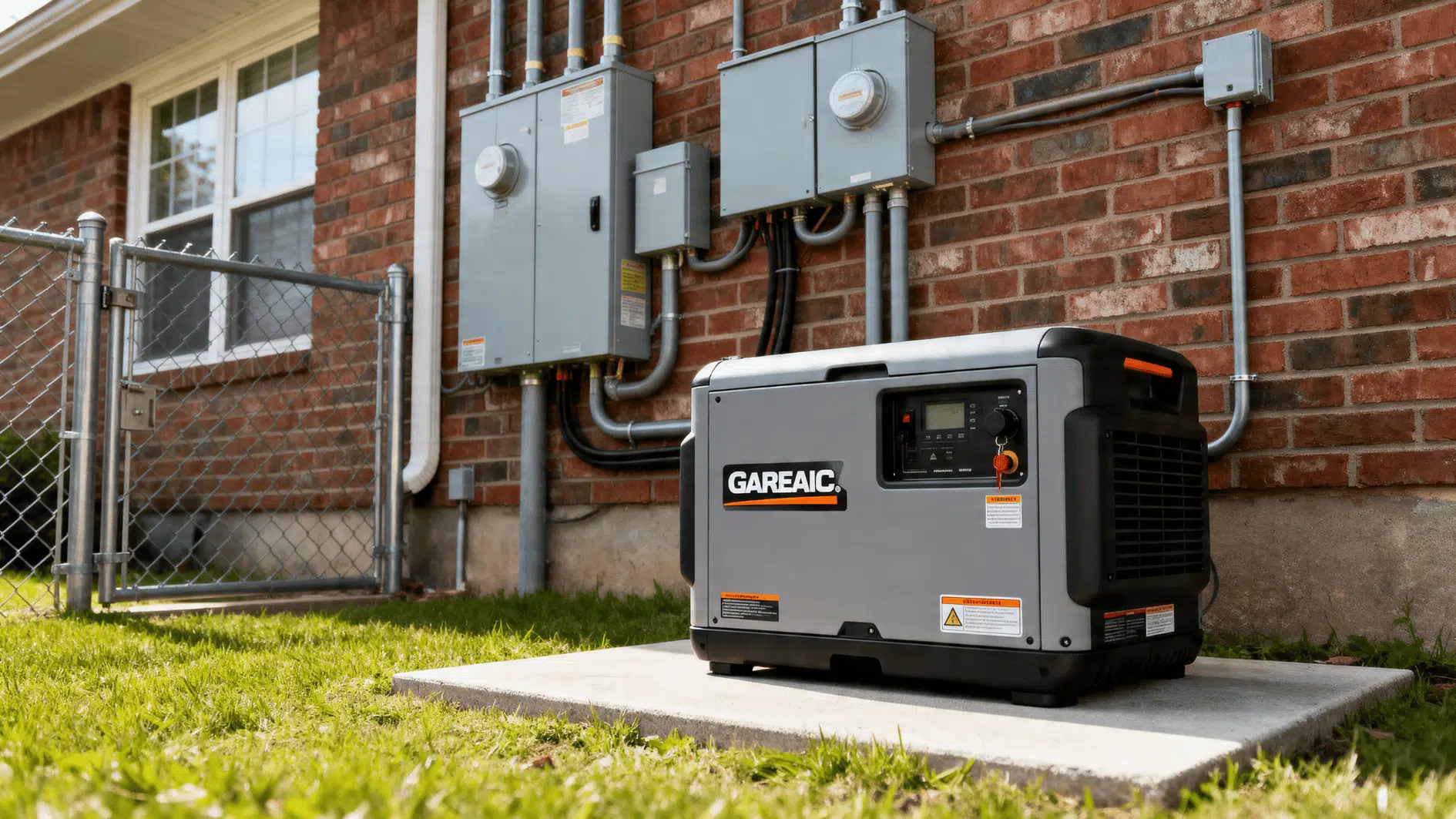
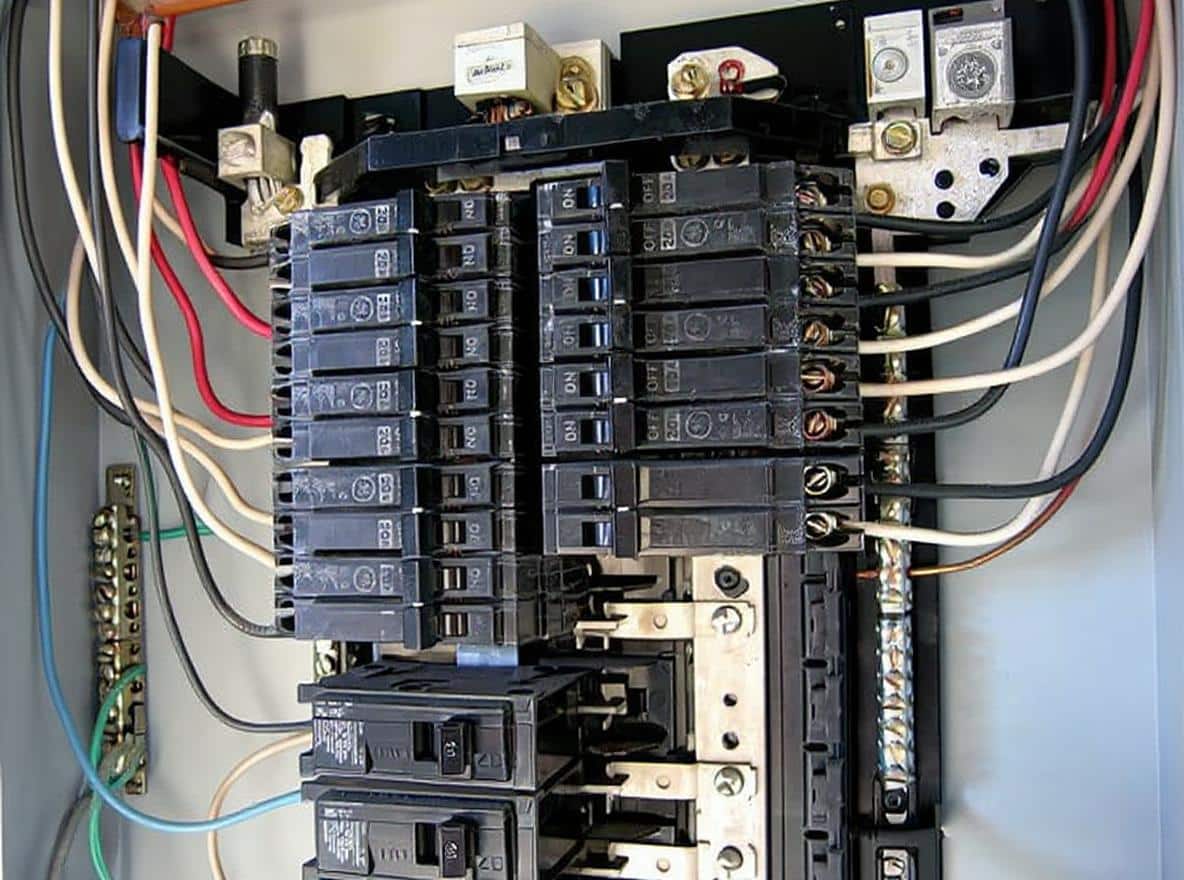
An electrical panel distributes electricity throughout your home. The amp rating tells you how much electricity the panel can safely deliver at one time.
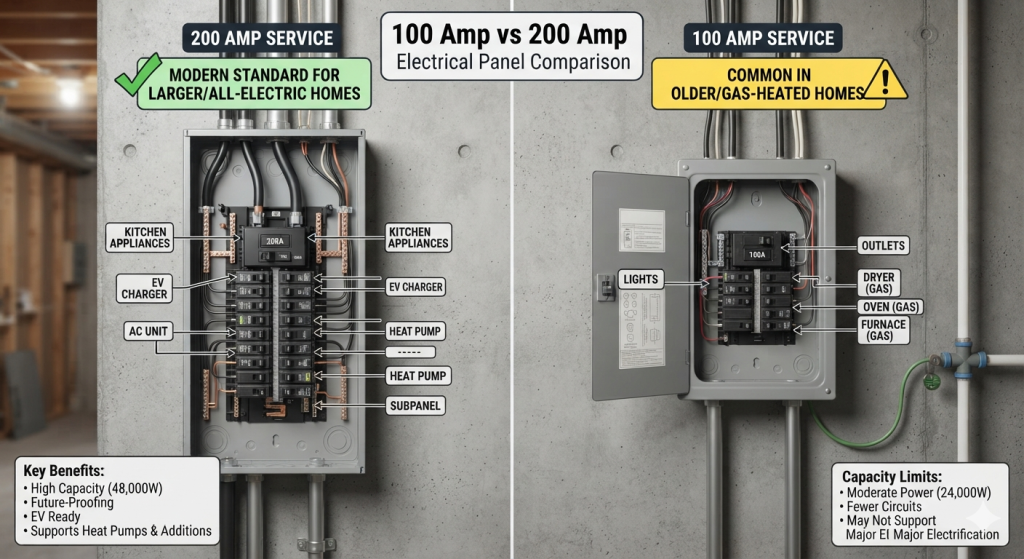
A 100 amp electrical panel is commonly found in older or smaller homes where electrical demand is relatively low. Homes with gas heating, gas water heaters, and fewer large appliances often function well with this setup.
A 200 amp electrical panel, on the other hand, is designed to handle significantly higher electrical loads. It provides additional capacity for larger homes and supports today’s technology-driven lifestyles.
Quick Definition
A 100-amp panel supplies up to 100 amps of electrical current, while a 200-amp panel doubles that available capacity, allowing more circuits and greater simultaneous power usage.
According to the U.S. Department of Energy, residential electricity demand continues to grow as homes adopt more electric appliances and technologies. Learn more at:
https://www.energy.gov/energysaver
Why More Homeowners Are Choosing Larger Electrical Panels
Think about how much electricity the average home uses today compared to twenty years ago.
Many households now have:
- Multiple televisions
- Home offices
- High-efficiency HVAC systems
- Electric dryers
- EV chargers
- Smart home devices
- Kitchen appliances running simultaneously
This growing demand increases the importance of sufficient electrical panel capacity for modern homes.
A panel that was perfectly adequate years ago may now be operating close to its limits every day.
“Quality is never an accident. It is always the result of intelligent effort.”
John Ruskin
That quote fits surprisingly well when discussing electrical systems. Planning ahead today often prevents expensive upgrades tomorrow.
How to Know Which Panel Fits Your Home
There is no universal answer when comparing a 100 Amp vs 200 Amp panel.
Instead, consider several factors.
A 100 Amp Panel May Be Enough If
- Your home is under approximately 1,500 square feet.
- Heating and water heating use natural gas.
- You have relatively few large electrical appliances.
- You rarely experience overloaded circuits.
A 200 Amp Panel May Be Better If
- You own a larger home.
- You plan to install an EV charger.
- You have electric heating or water heaters.
- You’re adding a hot tub or workshop equipment.
- You expect future renovations.
These situations often justify an electrical service upgrade before additional electrical demand creates problems.
Signs Your Electrical Panel Needs Attention
Many homeowners overlook subtle warning signs because everything still appears to work most of the time.
Watch for these common signs your electrical panel needs an upgrade:
- Circuit breakers trip frequently.
- Lights dim when appliances start.
- You rely heavily on extension cords.
- New appliances overload existing circuits.
- Your panel feels warm or shows signs of corrosion.
These symptoms do not automatically mean you need a larger panel, but they do indicate that your electrical system deserves professional inspection.
A Simple Framework for Making the Right Decision
Instead of guessing, use this four-step framework.
1. Evaluate Your Current Usage
List your largest electrical loads, including HVAC equipment, kitchen appliances, laundry equipment, and garage devices.
2. Think Five to Ten Years Ahead
Future projects often include:
- Home additions
- Electric vehicles
- Solar systems
- Battery storage
- Outdoor living spaces
Planning now may eliminate the need for another upgrade later.
3. Review Your Existing Panel
Determine its age, condition, available breaker space, and overall performance.
4. Schedule a Professional Assessment
A licensed electrician can calculate your home’s actual electrical load rather than relying on assumptions.
Comparing Both Options
Feature | 100 Amp Panel | 200 Amp Panel | Common Mistake |
Best for | Smaller homes | Larger or growing homes | Choosing based only on cost |
Available capacity | Moderate | High | Ignoring future electrical needs |
Room for expansion | Limited | Excellent | Filling every breaker space |
Supports EV charging | Sometimes | Usually | Assuming every panel can handle added loads |
Long-term flexibility | Lower | Higher | Waiting until problems become emergencies |
Common Misconceptions
Several myths often confuse homeowners during an electrical panel upgrade.
Bigger Always Means Better
Not necessarily.
Installing a larger panel that greatly exceeds your home’s needs may provide little practical benefit if no future expansion is planned.
A New Panel Lowers Electric Bills
A panel itself does not reduce energy consumption. However, replacing outdated equipment can improve reliability and provide safer operation.
Every Older Home Needs 200 Amps
Many older homes continue operating safely with 100 amps because their electrical demands remain relatively modest.
The key is matching capacity to actual usage.
A Realistic Example
Consider two neighbors.
The first family lives in a smaller home using gas heat, a gas range, and standard household appliances. Their 100 amp electrical panel comfortably supports their daily routine.
Next door, another family recently purchased an electric vehicle, converted their garage into a home office, installed a heat pump, and added smart home automation throughout the house.
Although both homes are similar in size, their electrical demands differ dramatically.
For the second family, upgrading became a practical investment rather than an unnecessary expense.
This illustrates why comparing a 100 Amp vs 200 Amp panel requires looking beyond square footage alone.
Understanding Upgrade Costs
Many homeowners ask about the cost to upgrade from 100 amp to 200 amp service.
The final price varies depending on factors such as:
- Existing wiring condition
- Utility company requirements
- Local permit fees
- Panel location
- Service entrance upgrades
- Grounding improvements
Every home is unique, making professional estimates far more accurate than generic online averages.
Rather than focusing only on the installation cost, consider the long-term value of improved capacity, flexibility, and safety.
How Breaker Panel Size Affects Everyday Living
Choosing the right breaker panel size for home electrical systems influences more than convenience.
An appropriately sized panel helps:
- Reduce overloaded circuits
- Support additional appliances safely
- Improve electrical reliability
- Simplify future renovations
- Increase buyer confidence when selling your home
As homes continue adopting new technologies, having sufficient electrical capacity becomes increasingly important.
When Is Residential Panel Replacement Necessary?
Sometimes repairs are enough.
Other situations require residential electrical panel replacement, particularly when the panel shows signs of aging, damage, or no longer meets household electrical demands.
Replacement may also be recommended when:
- The panel has become obsolete.
- Replacement parts are difficult to obtain.
- Multiple upgrades are planned simultaneously.
- Safety concerns are identified during inspection.
Rather than waiting for repeated electrical problems, proactive replacement often provides greater peace of mind.
Choosing the Right Upgrade
When comparing a 100 Amp vs 200 Amp panel, the goal is not simply purchasing more capacity. It is selecting a system that safely supports your family’s lifestyle today while leaving room for tomorrow.
If your home continues growing alongside your electrical needs, investing in additional capacity now may prevent future limitations and unnecessary renovation costs.
For homeowners considering an Electrical System Upgrade in Cameron, NC, working with experienced professionals ensures the installation is properly sized, code compliant, and designed for long-term reliability. At JL HVAC & ELECTRICAL LLC, every recommendation begins with understanding your home’s actual electrical demands rather than recommending a one-size-fits-all solution.
Conclusion
Deciding between a 100 Amp vs 200 Amp panel comes down to balancing present needs with future plans. While many homes continue to operate safely with a 100-amp service, today’s increasing reliance on electrical technology makes a 200-amp panel a smart investment for many households.
The best decision is one based on careful evaluation rather than assumptions. A qualified electrician can assess your home’s electrical load, explain your options, and recommend a solution that supports safety, reliability, and future growth.
Summary
Choosing the right electrical panel is about more than increasing capacity. It is about ensuring your home’s electrical system can safely support your daily lifestyle and future upgrades. Understanding your current usage, recognizing warning signs, and planning ahead will help you make an informed decision. Professional guidance ensures your investment delivers lasting value and dependable performance.
Frequently Asked Questions
1. Is a 200 amp panel always better than a 100 amp panel?
Not always. The right choice depends on your home’s electrical demand, future plans, and existing electrical infrastructure.
2. How do I know if I need a 200 amp service?
Frequent breaker trips, major home renovations, EV charging, and adding large appliances are common indicators. A licensed electrician can perform a load calculation to determine your actual needs.
3. How long does an electrical panel upgrade usually take?
Most residential panel replacements can be completed within a day, although larger projects involving utility upgrades or extensive wiring changes may take longer.
4. Why should I choose JL HVAC & ELECTRICAL LLC for my electrical panel upgrade?
JL HVAC & ELECTRICAL LLC provides experienced electrical solutions tailored to each home’s requirements, focusing on safe installations, accurate load assessments, and dependable workmanship.
5. Does JL HVAC & ELECTRICAL LLC inspect existing electrical panels before recommending replacement?
Yes. Every evaluation begins with a professional inspection to determine your current panel’s condition, capacity, and whether repair, replacement, or expansion is the most appropriate solution.